What Changed
Why dental practices are shifting marketing budgets to YouTube to grow sales at lower patient acquisition costs.
Why It Matters
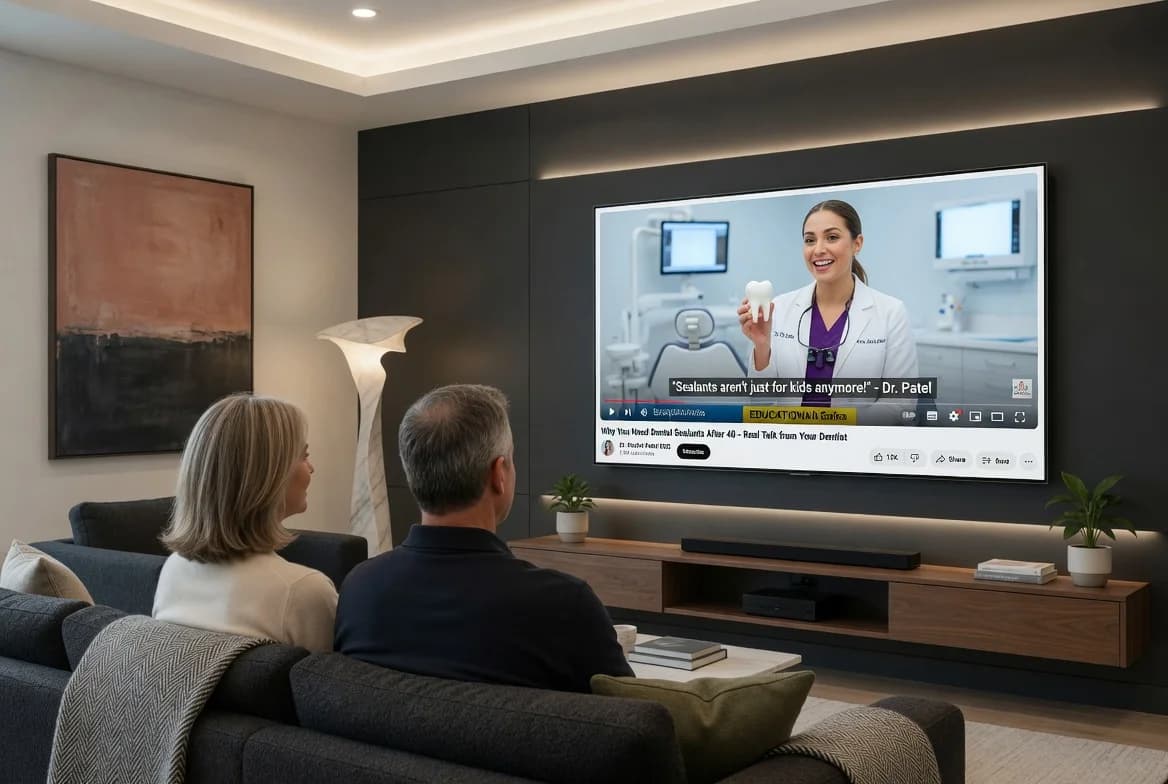
Shift from Transactional to Educational ROI : Unlike the "scroll-past" nature of Instagram, YouTube’s dominance in the living room allows practices to run 2-to-3-minute patient testimonials or procedure explainers.
Where Demand, Trust, or Operations Break
Hyper-Local Precision : Practice owners can now "geo-fence" their high-intent neighbors with TV-quality commercials for a fraction of the cost of a local news spot. With CPMs ranging from $6 to $12, owners can achieve dominant brand awareness within a 10-mile radius of their office for less than the cost of a single direct-mail campaign.
What the Operator Should Do Next
Diversification Advantage : Moving a portion of the marketing budget to YouTube Shorts and long-form content acts as a hedge against Meta’s fluctuating ad costs and declining engagement. By capturing the 12.7% of "TV time" that YouTube now controls, practices can stay top-of-mind for discretionary cosmetic work even if broader economic conditions tighten.
Field Notes
YouTube has officially become the dominant U.S. media platform, capturing a record 12.7% share of all television viewing, surpassing Netflix and legacy broadcast networks.
- Shift from Transactional to Educational ROI : Unlike the "scroll-past" nature of Instagram, YouTube’s dominance in the living room allows practices to run 2-to-3-minute patient testimonials or procedure explainers.
- Hyper-Local Precision : Practice owners can now "geo-fence" their high-intent neighbors with TV-quality commercials for a fraction of the cost of a local news spot. With CPMs ranging from $6 to $12, owners can achieve dominant brand awareness within a 10-mile radius of their office for less than the cost of a single direct-mail campaign.
- Diversification Advantage : Moving a portion of the marketing budget to YouTube Shorts and long-form content acts as a hedge against Meta’s fluctuating ad costs and declining engagement. By capturing the 12.7% of "TV time" that YouTube now controls, practices can stay top-of-mind for discretionary cosmetic work even if broader economic conditions tighten.