What Changed
The 2026 Dental Google Ads Crisis: Rising CPC & DSO Competition
Why It Matters
Margin Compression on Electives : With CPAs for implants and Invisalign now ranging from $150 to $400, your marketing ROI is shrinking. Owners must increase "case acceptance" rates at the chairside to justify the higher cost of getting the patient through the door.
Where Demand, Trust, or Operations Break
The Efficiency Gap : Practices failing to use HIPAA-compliant "Enhanced Conversions" are essentially subsidizing the auction for more tech-savvy competitors. Without precise tracking, your Google Ads spend is 20-30% less efficient than a modernized DSO's spend.
What the Operator Should Do Next
Pivoting to "Offer Strength" : Because searchers are clicking multiple ads before booking, your ad copy must move beyond "Quality Care" to specific, high-friction-reducing offers like "Same-Day Emergency Appointments" or "Transparent All-on-4 Pricing."
Field Notes
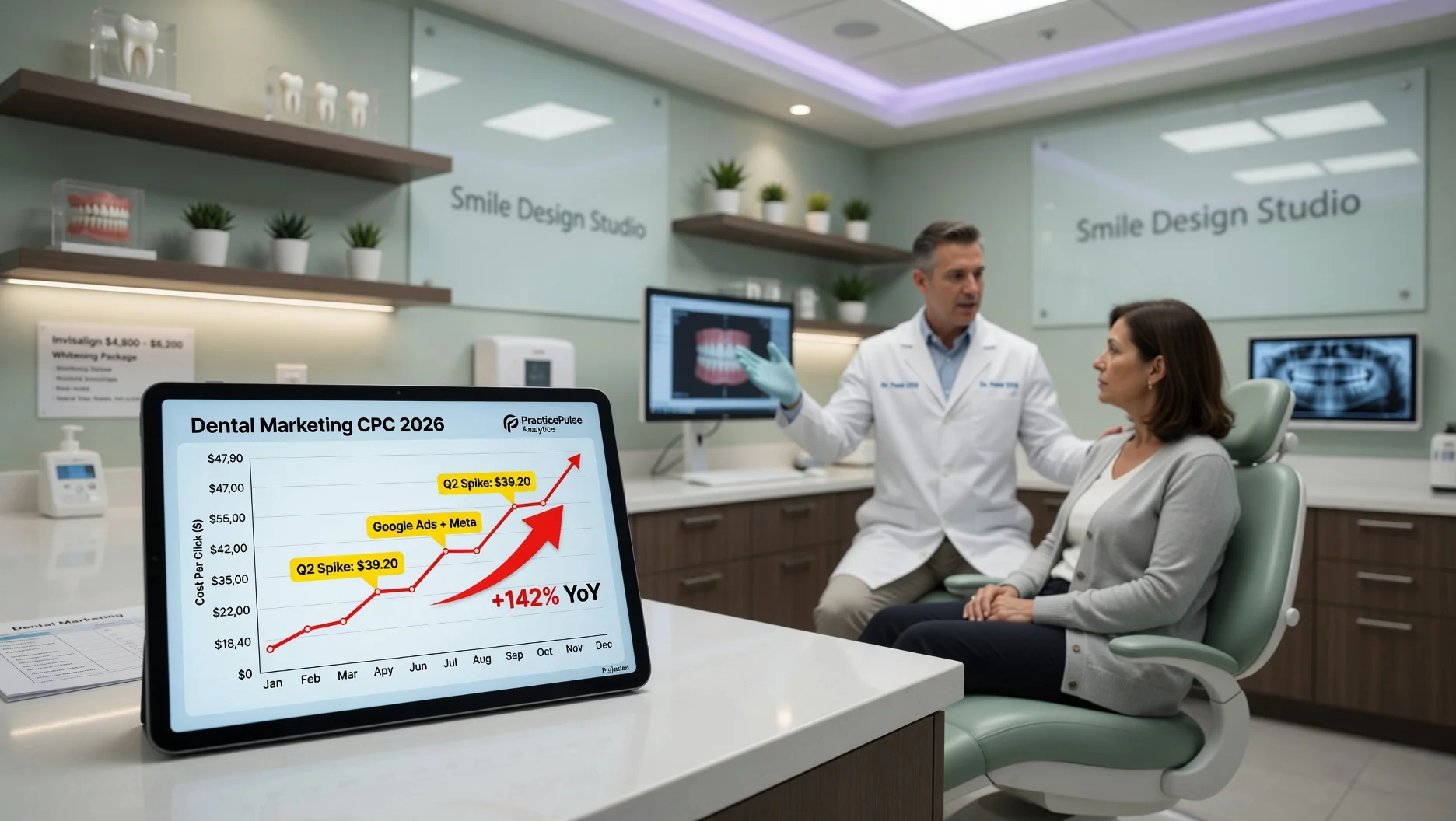
Dental Google Ads costs have surged 10-15% in 2026, with high-intent keywords like "dental implants" reaching $12-$25 per click, signaling the end of low-cost digital patient acquisition.
- Margin Compression on Electives : With CPAs for implants and Invisalign now ranging from $150 to $400, your marketing ROI is shrinking. Owners must increase "case acceptance" rates at the chairside to justify the higher cost of getting the patient through the door.
- The Efficiency Gap : Practices failing to use HIPAA-compliant "Enhanced Conversions" are essentially subsidizing the auction for more tech-savvy competitors. Without precise tracking, your Google Ads spend is 20-30% less efficient than a modernized DSO's spend.
- Pivoting to "Offer Strength" : Because searchers are clicking multiple ads before booking, your ad copy must move beyond "Quality Care" to specific, high-friction-reducing offers like "Same-Day Emergency Appointments" or "Transparent All-on-4 Pricing."